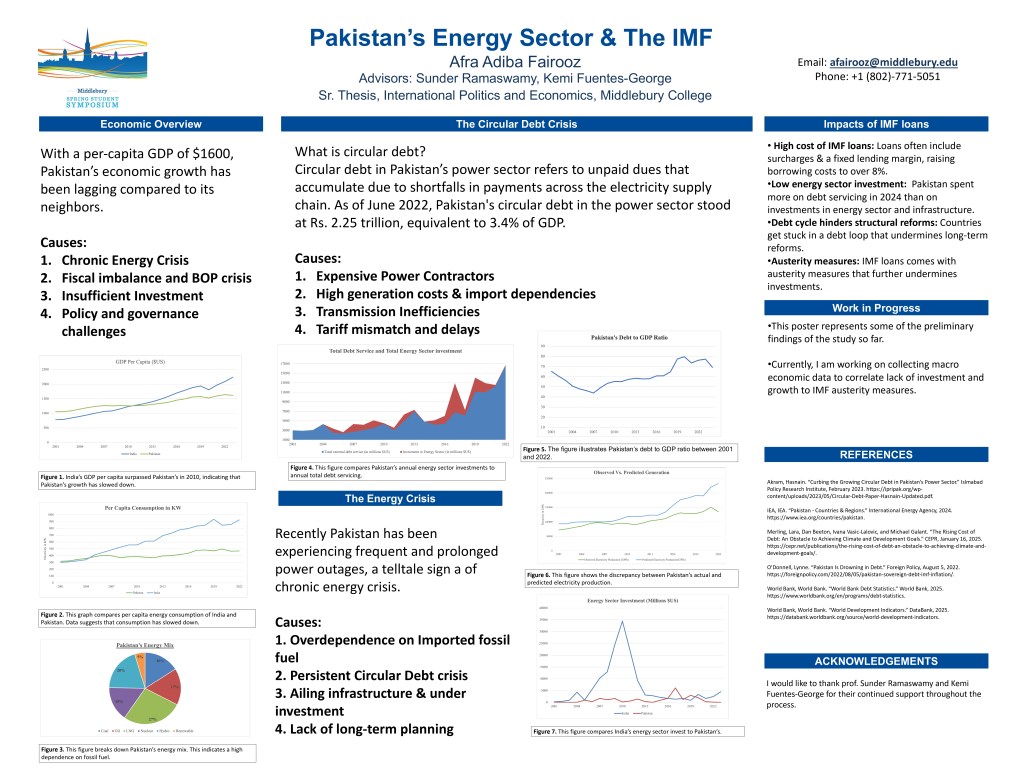
Effects of macroeconomic stabilisation conditions on energy sector investments in Pakistan
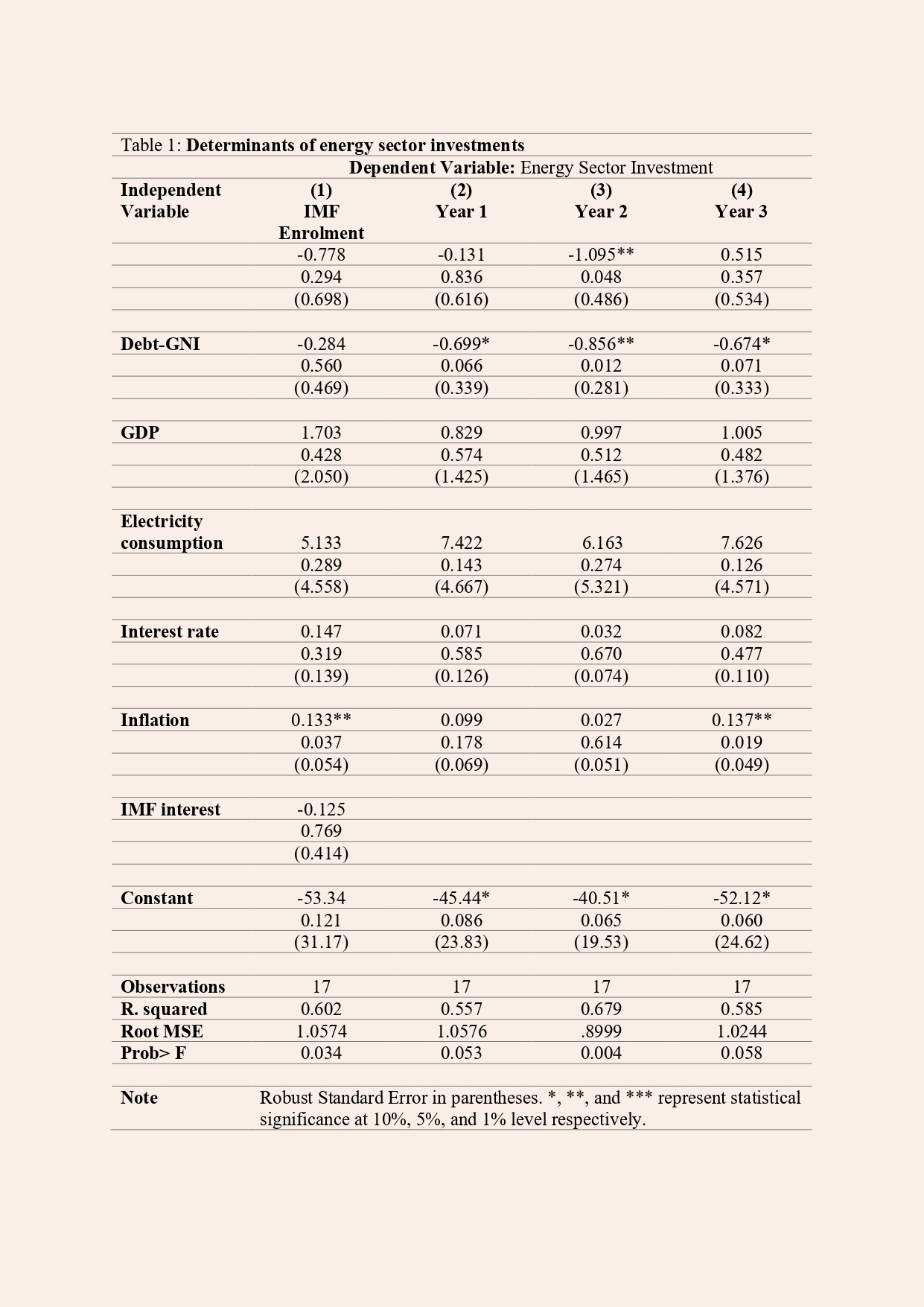
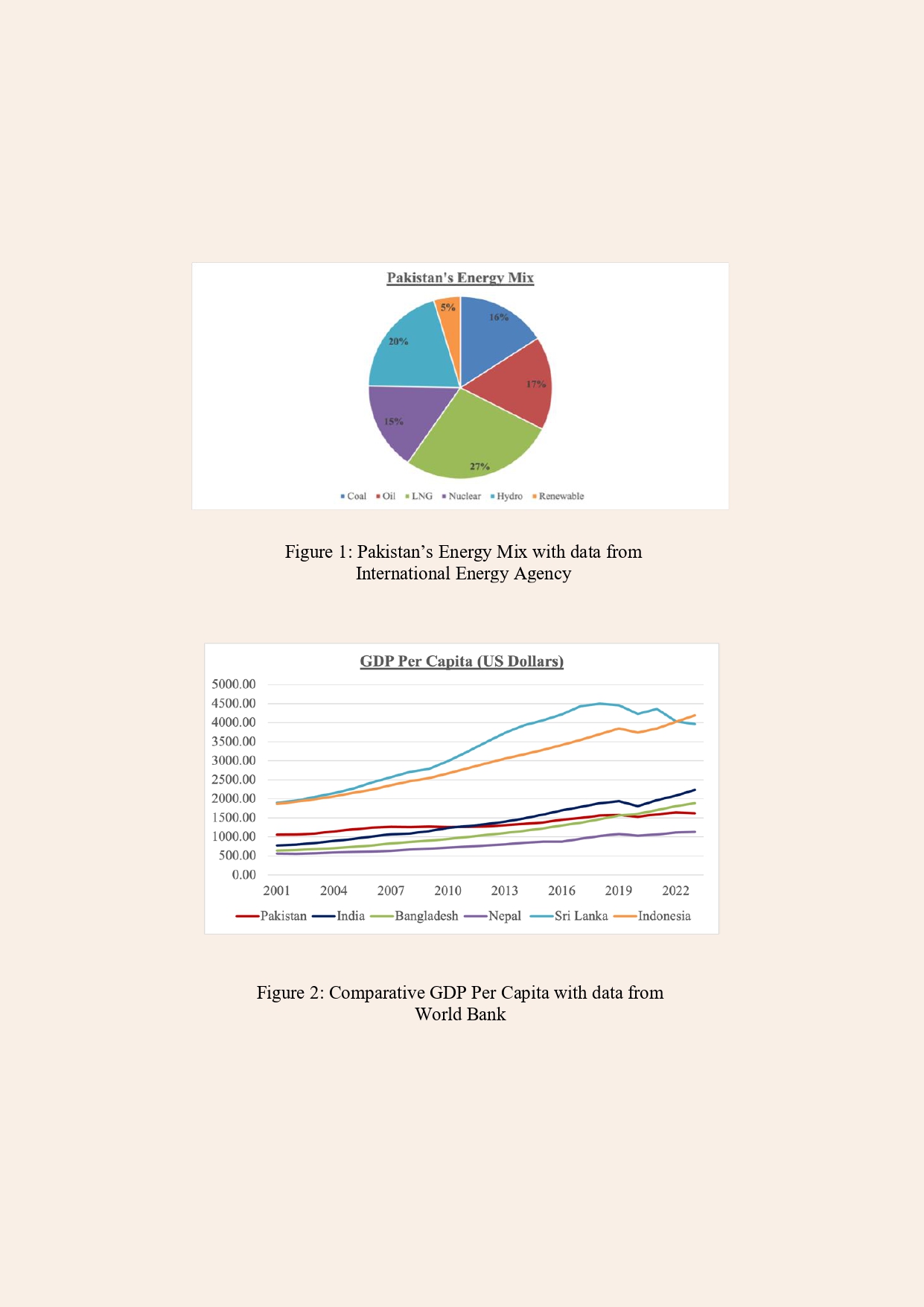
Using the World Bank Debt Statistics database, she built a comprehensive longitudinal dataset of 20+ variables across 22 years. Indicators included interest rates, inflation, debt-GNI ratio, energy consumption, GDP, and more. Using a semi-log multivariable regression model, Ms. Fairooz, concluded that between 2001 and 2023 energy sector investment in Pakistan decreased by 109% if the country was enrolled in an IMF program two years prior. Ms. Fairooz used the statistical software, Stata, for her analysis. She completed her thesis under the guidance of Prof. Sunder Ramaswamy. A concise version of her work has been published in the Middlebury Journal of Global Affairs.
Ms. Fairooz investigated the impacts of macroeconomic stabilisation conditions, that are a hallmark of IMF programs, on investment rates in the energy sector of Pakistan for her honours thesis at Middlebury College.
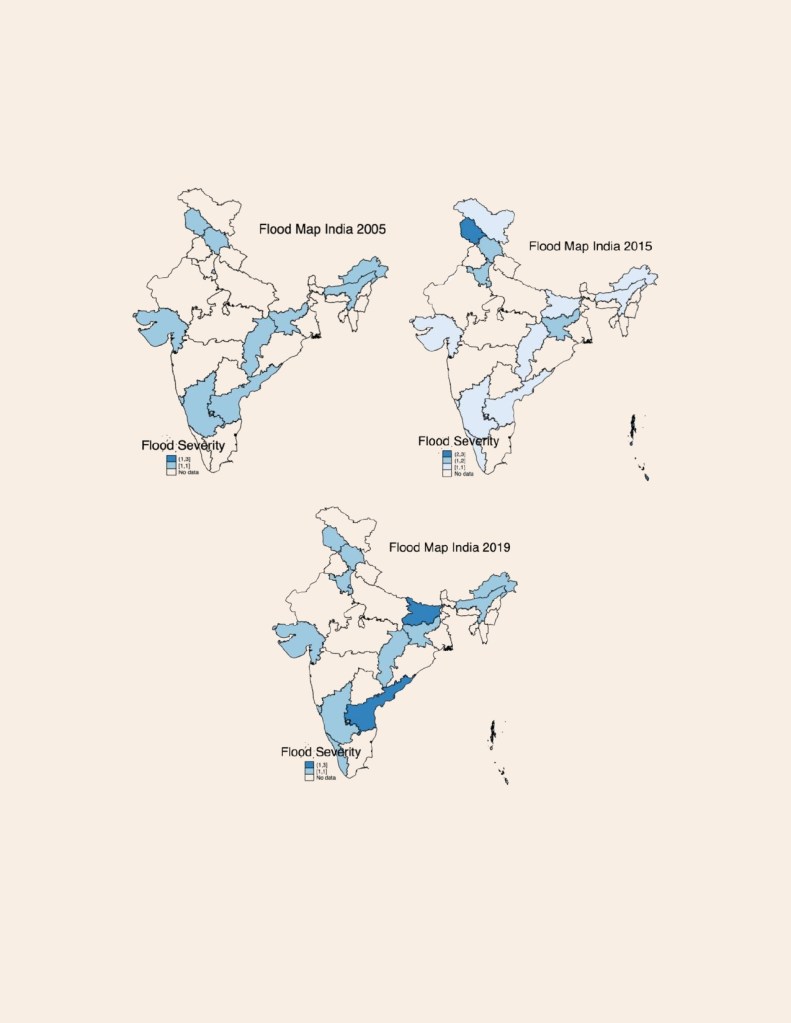
Increasing flood levels and healthcare in India
Ms. Fairooz studied the impacts of increased flooding on women’s reproductive and mental health in India for her capstone project at Middlebury College. Using data from IPUMS Demographic and Health Survey, she built a dataset of 2 million observations across 3 years and 28 states with variables on barriers to healthcare, domestic violence, age, level of education, employment, marital status, and more. The data on flooding for this study was collected from HydroSense Lab of Indian Institute of Technology, Delhi. The geospatial maps presented here, built by Ms. Fairooz using Stata, demonstrate the increase of flood incidence and intensity in India. Using a fixed effects regression model Ms. Fairooz concluded that flood level rise increases barriers to healthcare for women by 33 percentage points.
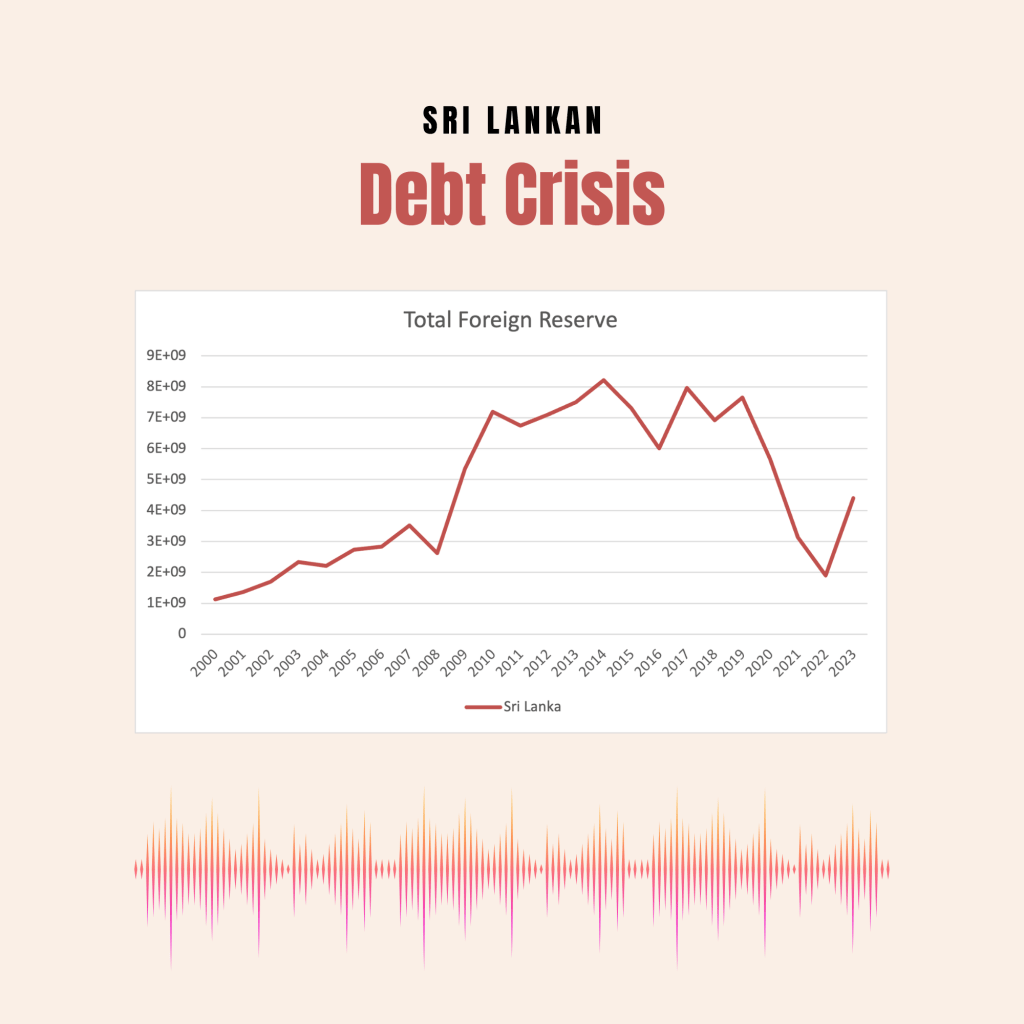
Sri Lanka’s Debt Crisis in 2022
In Fall of 2024, Ms. Fairooz produced a research podcast on the causes and implications of the 2022 Sri Lankan debt crisis as a capstone project for her senior seminar. The 25 minutes-long podcast summarised Sri Lanka’s political history since 1948 including the civil war and the Rajapaksa regime, economic structures, IMF programs, and bilateral treaties. The research concluded that Sri Lanka’s economic structure that primarily relies on agriculture and tourism, sectors that are vulnerable to exogenous shocks, and poorly planned infrastructural projects resulted in the 2022 debt crisis. The podcast was scripted, engineered, and produced by Ms. Fairooz.